Leica Monopan 50
A new journey into black and white from the inventor of the 35mm Camera

INITIAL THOUGHTS
When Oskar Barnack made the first Leica 35mm camera in 1913, could he have ever imagined that Leica would be producing film in 2025? To see how far one person’s vision can grow is a testament to Leica, as it deepens its role in the future of not just digital photography, but analogue too.
When I first heard Leica was releasing 35mm film I was surprised it hadn’t already happened. It makes the most sense that the inventor of the 35mm camera in 1913 would also create 35mm film. It took until 2025 for Leica to move into the world of film emulsion, and my succinct opinion: about time! One of the things I’ve always respected about the brand is their ethos, rather than trying to capitalize on consumer trends, Leica always focuses on maintaining their heritage in its endeavors.
Luckily I got the call from Leica Store L.A early and was able to purchase two rolls of this film. The shots you will see were all taken on the 50mm Summilux at f/1.4. Why wide open? Well, Leica intended for the 50 ISO to allow the Summilux lenses to be taken advantage of in bright conditions. After all, the signature wide open look is the reason the Summilux lenses are renowned in the industry, and from the pictures below you’ll be surprised to see how sharp it can still perform at f/1.4.
Note: I won’t go into the technical detail of the film, I will be focusing on my observed experience from shooting with it, and I believe that will be more insightful.
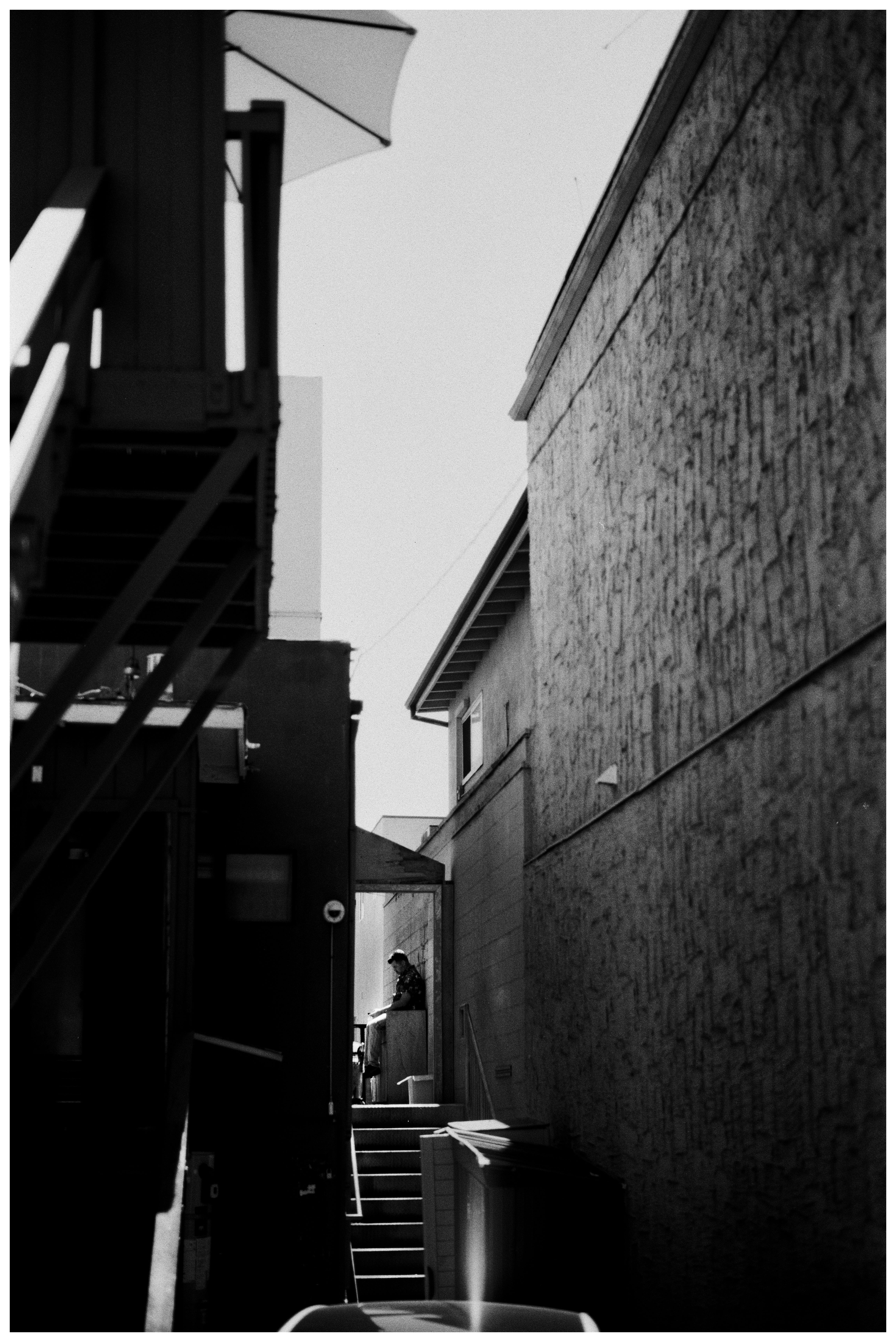
When I shoot film, I’m a big believer that if there’s light available, offer it to the film (within reason). The 50 Monopan is very greedy for light, but what you get in return is an interesting rendition with ultra-fine grain and a beautiful mid-tone that feels unique to this stock. As a Tri-X 400 shooter I was very used to the iconic Kodak look, but this film made me appreciate the different tones it created. Choosing a film stock is a form of post production: the look you choose is baked into the image. With the Monopan, I was intrigued by its clean look mixed with noticeable character.
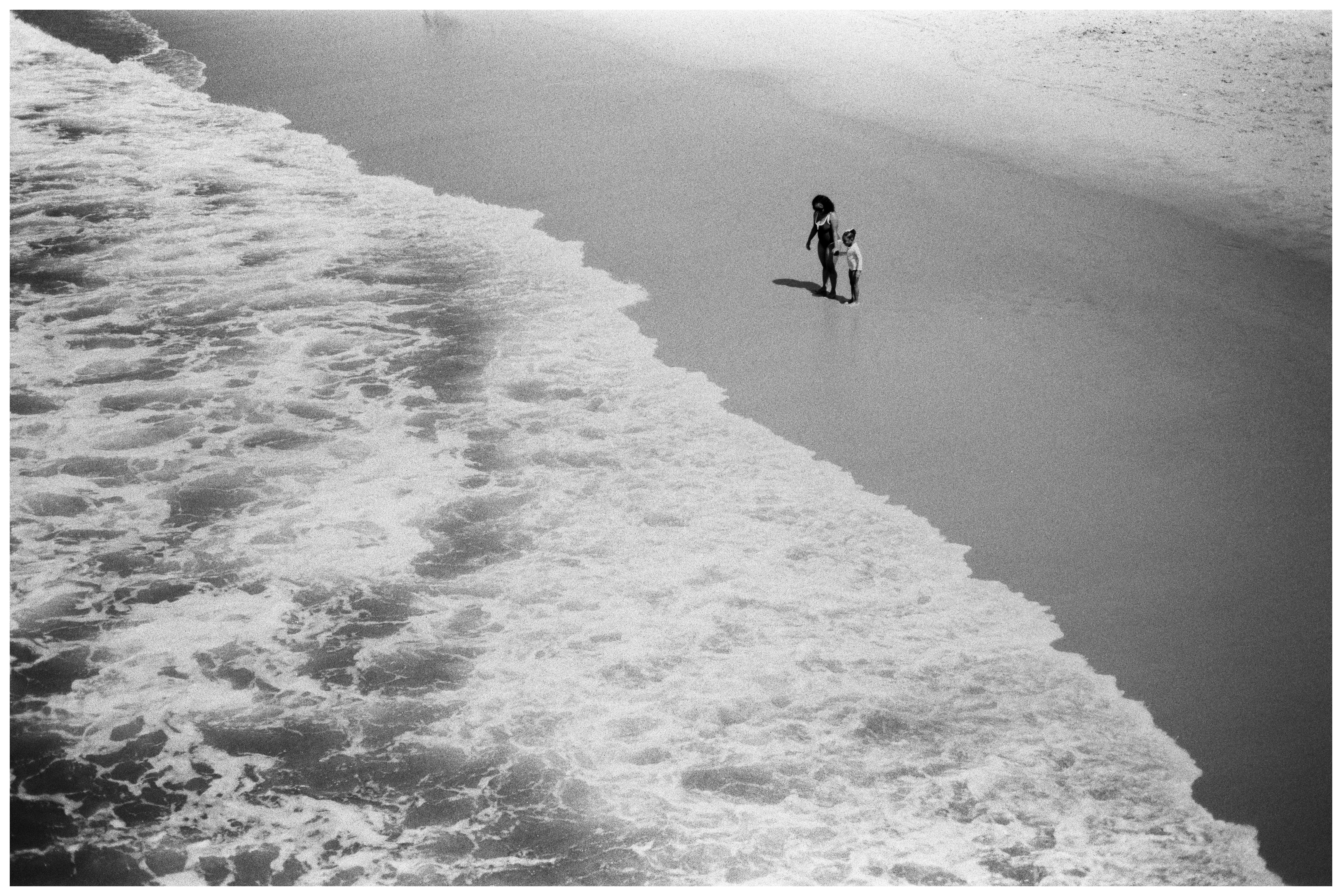
f/1.4
After shooting this entire roll at f/1.4, I’m now shooting another roll at mixed apertures to really test the tonal range. Keeping the aperture wide open, my exposure was 2 to 3 stops over when shooting images at the beach. This tested the highlight latitude of the film and I was impressed to see how much detail was still there.
It also allowed me to create more soft-focused images in bright light conditions. Clinical sharpness is not as attractive to me as it once was, so I welcomed the chance to create softer images in the daytime, when I’m typically forced to stop down to f/8. Now 50 ISO is not new, but with this being the only offering from Leica, it influenced my decision to even consider shooting at that ISO. Typically I would have taken 400 ISO by default, so it was a nice challenge for myself to think differently.
WARNING
For my fellow Leica shooters out there, if you shoot with your aperture wide open make sure you do not leave the camera pointed towards the sun. The lens will act as a magnifier and burn a hole in your shutter cloth. Best advice: keep a lens cap on if you’re not shooting and when you are be sure to point the camera away from the sun. Being in California, the sun is strong, so some of you may never have to deal with such an issue, but it’s a worthy bit of information to remember.
LIMITATIONS
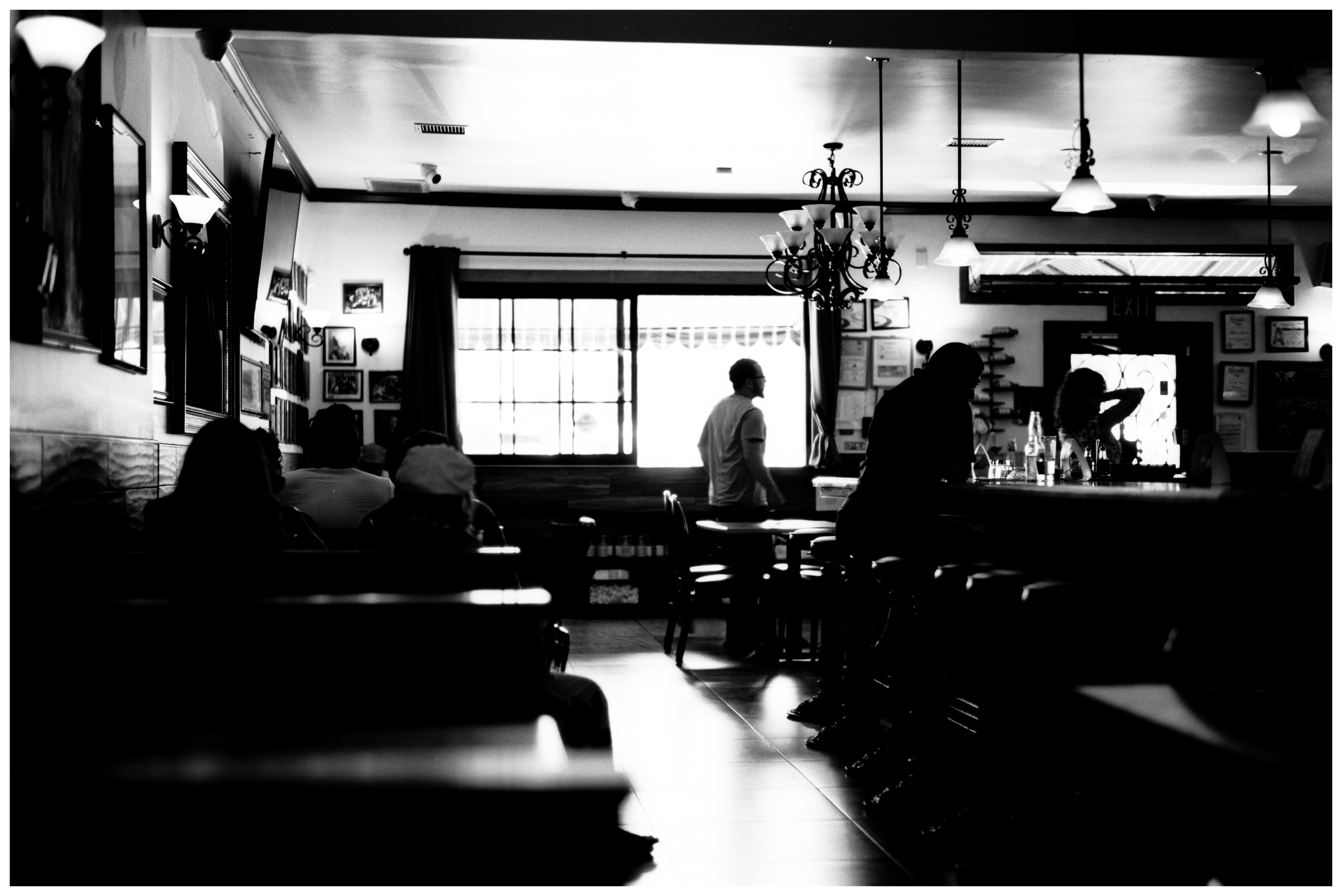
Naturally the ISO will work against you when you’re indoors. I like to shoot a mixture of scenes and the 50 ISO was almost unusable indoors. It reminded me of when I would shoot Kodak 8mm 50D, which you wouldn’t even consider for indoor filming. But, if you push yourself creatively and look for a strong light source you could create interesting images with a deep fall-off into the blacks. The image below was shot inside a restaurant at midday.
DEVELOP & SCAN
Due to the film being new on the market and hard to get hold of, most labs have not worked with the Monopan and may treat it as any other film. While there may be similarities in how you can develop a 50 ISO film, be sure to share the information inside the 35mm packaging on the development times with your lab. Alternatively, click here for a link to Leica’s website for details on development times. Depending on what chemistry the lab uses, there will be variances that affect the outcome. For capturing the most tonal range, I would recommend getting it scanned with the Noritsu HS-1800. If possible, ask the lab to turn the scanner sharpness off, this will avoid overly pronounced grain.
IS THIS FILM WORTHY?
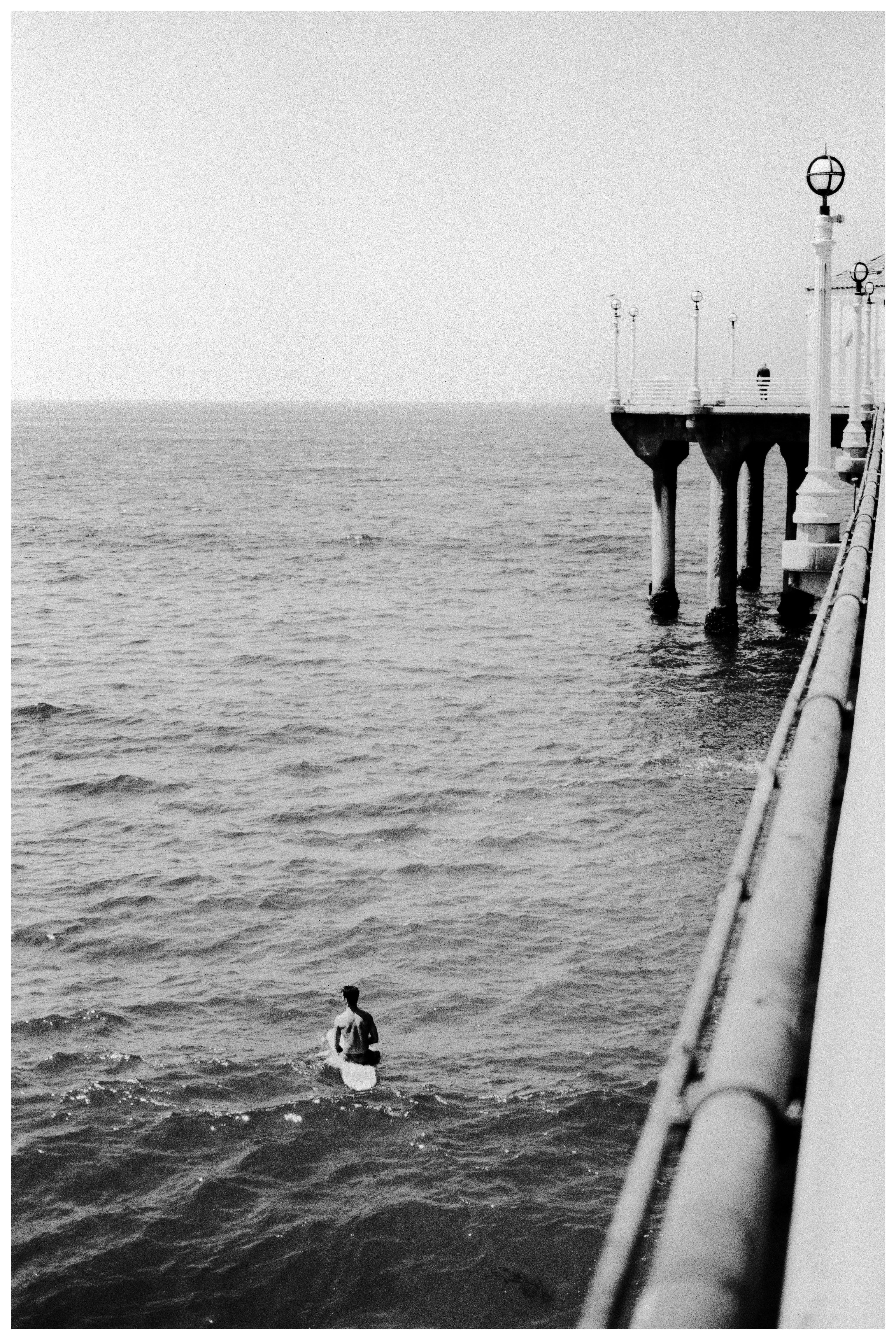
Simple answer, yes. Film is paint for the photographer, and we should happily welcome another rendition of black and white into the market. Not only is it a reminder that film’s resurgence has passed its hype phase, but it’s here to stay. In the world of digital, analogue processes allow us to see a world without screens, trust our instinct, and avoid the digital doubt that makes us check our screen after every shot.
Leica was very competitive with the price point, and I feel this is just the beginning. I would love to see Leica step into the color film photography world. I’ve always appreciated their color science and I wouldn’t be surprised if the Monopan is just the beginning of a journey to higher ISO’s and more film stocks.
If you have questions about the film, message me and I’ll do the best I can to reply. But as always, experience is the best teacher, get your hands on the film, put it through your camera and learn from how it renders your world.
Can’t wait to get a roll of this! Images look lovely here, thank you for the review!,